Preparing matcha with a chasen isn't complicated, but a few details make all the difference between a failed bowl and a bowl worthy of a Kyoto tea house. Here is the complete method, adapted for beginners.
Necessary equipment
To get started, four tools are essential:
The chawan (matcha bowl)
A wide, flared bowl, about 12-14 cm in diameter. The width allows the chasen to move freely without hitting the sides. Failing that, a cereal bowl will do for starters.
The chasen (bamboo whisk)
The traditional whisk, carved from a single piece of bamboo into 80 to 120 fine prongs. This is the essential tool: it's impossible to create a fine foam with an egg whisk or an electric frother.
The chashaku (matcha spoon)
A small, flat bamboo spoon, which scoops approximately 1g of matcha per spoonful. A heaped teaspoon is the equivalent.
A matcha sieve
Optional but highly recommended. Matcha tends to form micro-aggregates in the tin. A sieve prevents lumps in the bowl.
Step 1: Prepare the equipment
Soak the chasen in a bowl of warm water for 1 to 2 minutes before use. This softens the bamboo prongs and prevents them from breaking during the first whisking. Also warm the chawan with hot water while you prepare the water.
Step 2: Water temperature
This is the most important and most often poorly executed parameter. The water should never boil for matcha. The ideal temperature is:
- 80 °C for a classic usucha (Isuzu, Wako, Yugen)
- 70 °C for a more delicate usucha
- 80 °C also for a koicha
Water that is too hot "burns" the matcha: the umami disappears, bitterness takes over. Tip without a thermometer: bring the water to a boil, transfer to a glass for 2 minutes, the temperature will naturally drop to 80 °C.
Step 3: Measure the matcha
For an usucha
- 2g of matcha (about 1 heaped chashaku or 1 level teaspoon)
- 70 ml of water
For a koicha
- 4g of matcha
- 30 ml of water
Step 4: Sift and add water
Sift the matcha directly into the chawan (empty and dry after discarding the preheating water). Then pour in the 80 °C water. Do not pour the water onto the dry matcha from above: the matcha will stick together at the bottom. Instead, pour it along the side of the bowl.
Step 5: Whisk (for usucha)
This is where technique matters. Hold the chasen firmly but without tension, halfway up the handle.
- Plunge the chasen into the liquid, prongs down
- Make a fast zigzag motion "M" or "W", using only your wrist (not your arm)
- Stay on the surface — the movement should lift air to create foam
- Continue for 15 to 20 seconds until you get a fine, uniform foam
- Finish with a slow circular motion to smooth the surface
Whisking should be vigorous but light. Too soft: no foam. Too much pressure: the prongs break and the matcha splashes.
Step 6: Knead (for koicha)
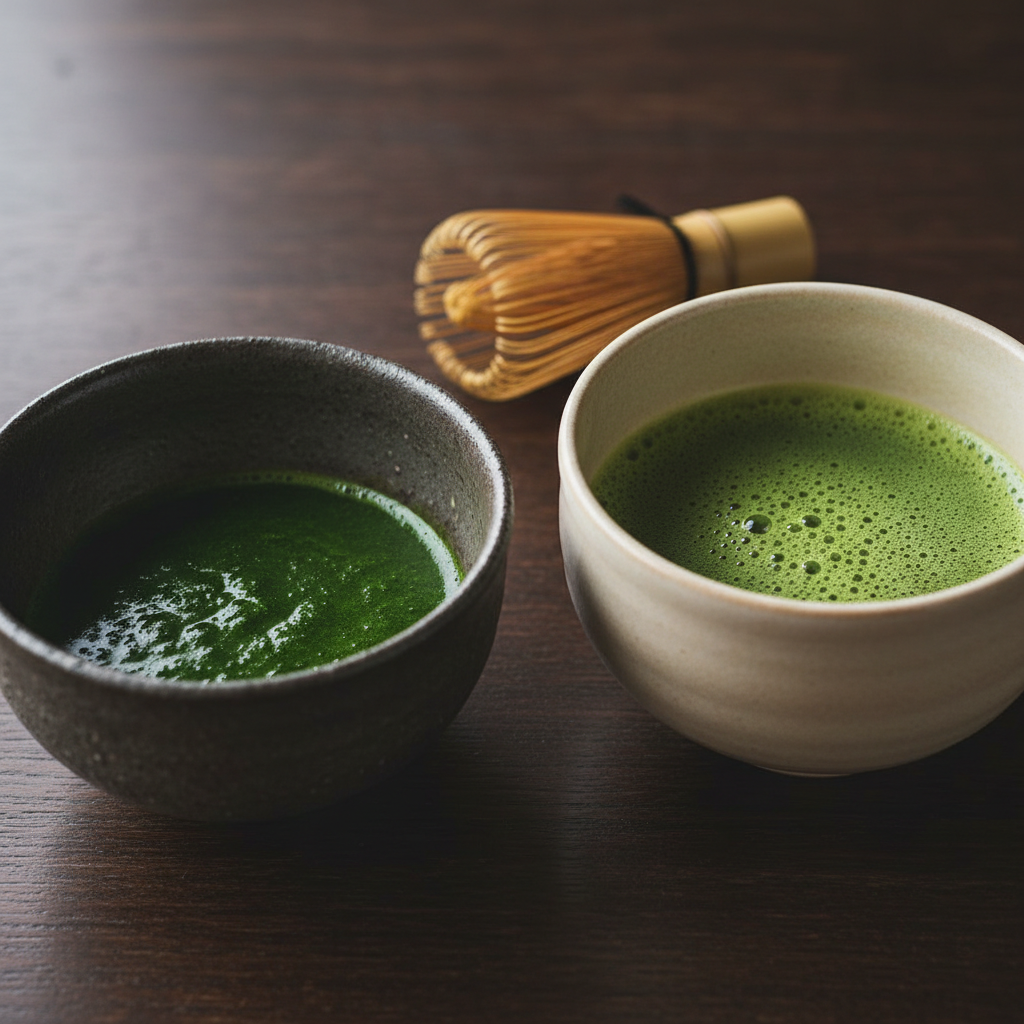
For koicha, the technique is the opposite. No fast whisking, but slow kneading in concentric circles, pressing lightly to dissolve the matcha well. The result should be a shiny, lump-free paste, like warm melted chocolate. No foam is sought.
Beginner mistakes
- Water too hot: ruins any matcha, regardless of its grade
- Dry chasen: the prongs break on first use
- Not sifting: guaranteed lumps, especially with matcha stored for a long time
- Whisking with the arm instead of the wrist: too slow a movement, no foam
- Too little matcha: watery taste, no foam. Do not go below 2g for an usucha.
Chasen maintenance
After use, rinse the chasen with warm water (never soap), shake it to remove excess water, and place it on a bamboo stand (kusenaoshi) to restore its shape. A well-maintained chasen lasts between 6 months and a year with daily use.
Our selection for beginners
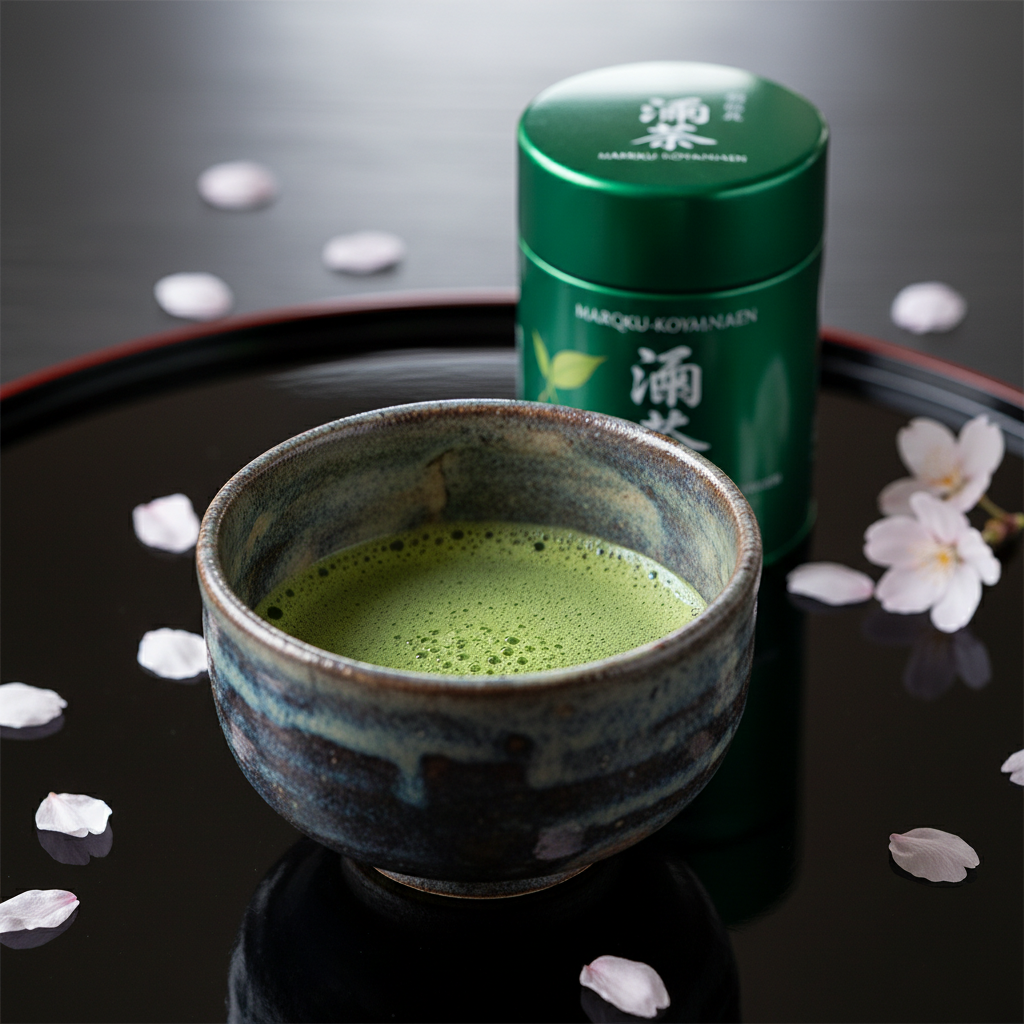
For your first steps, we recommend Marukyu-Koyamaen's Isuzu: it's a matcha that is forgiving enough to allow for technical errors while still offering the true flavors of an Uji usucha.
Ready to put it into practice? Discover our Marukyu-Koyamaen collection and start with the grade appropriate for your level.