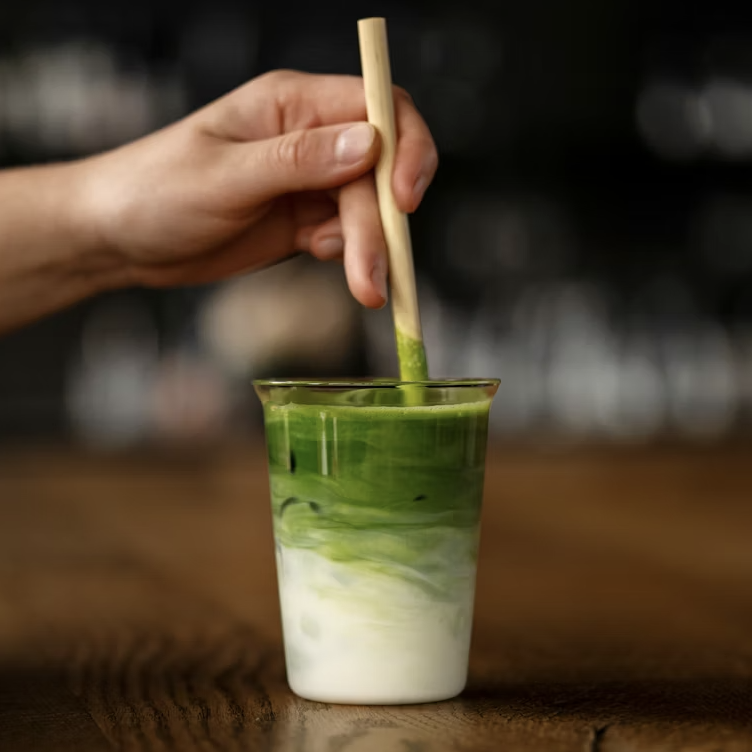
In twenty years, matcha has gone from a Kyoto Buddhist temple to Starbucks' menu. How did this ancient green powder become one of the planet's trendiest beverages? A look back at the meteoric rise of a tea like no other.
From Zen Ceremony to Global Phenomenon
Matcha has existed since the 12th century. Imported from China by the Buddhist monk Eisai, it became ingrained in Japan as the central element of chanoyu, the tea ceremony. For 800 years, its consumption remained largely tied to ritual: a spiritual, codified, almost sacred act.
Then, in the 2000s, matcha left the tatami to enter cafes, pastry shops, health blogs, and Instagram feeds. Today, the global matcha market is estimated at over $4 billion, with double-digit annual growth. What happened?
1. The "Superfood" Wave of the 2010s
Matcha benefited from a perfect alignment with a major Western trend: the quest for superfoods. Like quinoa, acai, or spirulina, matcha ticked all the boxes:
- Rich in antioxidants (catechins, EGCG)
- Natural source of energy (caffeine + L-theanine)
- Originating from a culture associated with longevity (Japan)
- Visually recognizable (vibrant green)
Health media, wellness bloggers, and later influencers propelled matcha to the rank of ideal coffee substitute. It offered energy without the "crash," Asian elegance without the complexity of loose-leaf tea.
2. The Instagram Boom
No food would have had the same trajectory without social media. Matcha is photogenic. Its fluorescent green contrasts perfectly with a frothy latte, an ice cream, a mille-feuille, or a cookie. The hashtag #matcha has over 12 million posts on Instagram and continues to grow.
Cafes worldwide—from Melbourne to Brooklyn, Paris to Seoul—understood the stakes: a well-served matcha latte is free advertising. A single photo taken at the counter is worth a thousand flyers.
3. The Japanese Diaspora and K-pop / J-pop Fashion
The global craze for Japanese culture—manga, anime, fashion, gastronomy, but also Korean K-pop which draws inspiration from J-style—created a generation curious about everything from Japan. Matcha became an identity marker: to like matcha is to like Japan.
Specialized cafes have sprung up in all major cities, often run by Japanese expatriates or enthusiasts who lived in Kyoto. In Paris, London, New York, or Berlin, you can now find matcha bars worthy of the best houses in Uji.
4. The "Healthy Lifestyle" Effect
Matcha has also established itself as the chic alternative to coffee in wellness, yoga, fitness, and vegan communities. Its ritual preparation naturally aligns with a slow-life and mindful approach. Where espresso symbolizes haste, matcha embodies a controlled pause.
Cosmetic brands followed suit: matcha creams, green masks, toothpastes… Matcha has become an identifying ingredient far beyond the beverage.
5. The Matcha Crisis of 2024-2025
The explosion of global demand led to an unexpected phenomenon: a matcha shortage. Japan, the main producer, did not anticipate such growth. Shaded tea bushes take several years to produce, and tencha production is not infinitely expandable.
In 2024 and 2025, several major Japanese brands—including Itoen—had to ration their sales. Prices soared. This "matcha crisis" paradoxically reinforced its aura: what becomes rare becomes desirable.
6. A Beverage That Became a Universe
Matcha is no longer just drunk: it is eaten, mixed, layered. Pastries (matcha tiramisu, cheesecake, Kit-Kats, mochi), ice creams, cocktails, smoothies, iced lattes, granolas, cookies… Matcha has become a transversal ingredient in global gastronomy.
Michelin-starred chefs have embraced it. Pierre Hermé, Cédric Grolet, and many others use it in their creations. In Tokyo, the Asakusa district houses restaurants entirely dedicated to matcha—from savory to sweet.
Why This Trend Will Last
Unlike many ephemeral trends, matcha rests on three solid pillars:
- An ancient culture that gives it a depth and legitimacy that few "trendy" foods possess.
- Documented nutritional benefits (antioxidants, gentle energy).
- A rare versatility of use: it can be drunk, cooked, incorporated into almost anything.
There will undoubtedly be occasional oversupply, and fad effects (matcha + anything and everything), but matcha is now a lasting part of the global food landscape. Like coffee in the 19th century, like sushi in the 20th, it is one of those products that have crossed the border of their original culture to become universal.
The Role of Quality
With mass production came mediocrity. Many matchas sold today are actually Chinese or Korean powders, sometimes oxidized, sometimes mixed. Traceability becomes crucial. Buying authentic Japanese matcha from a recognized house is the difference between a mediocre brew and the experience that captivated the world.
At Japanity, we work with Japanese producers like Itoen to offer you matcha that honors the 800 years of history behind every bowl.