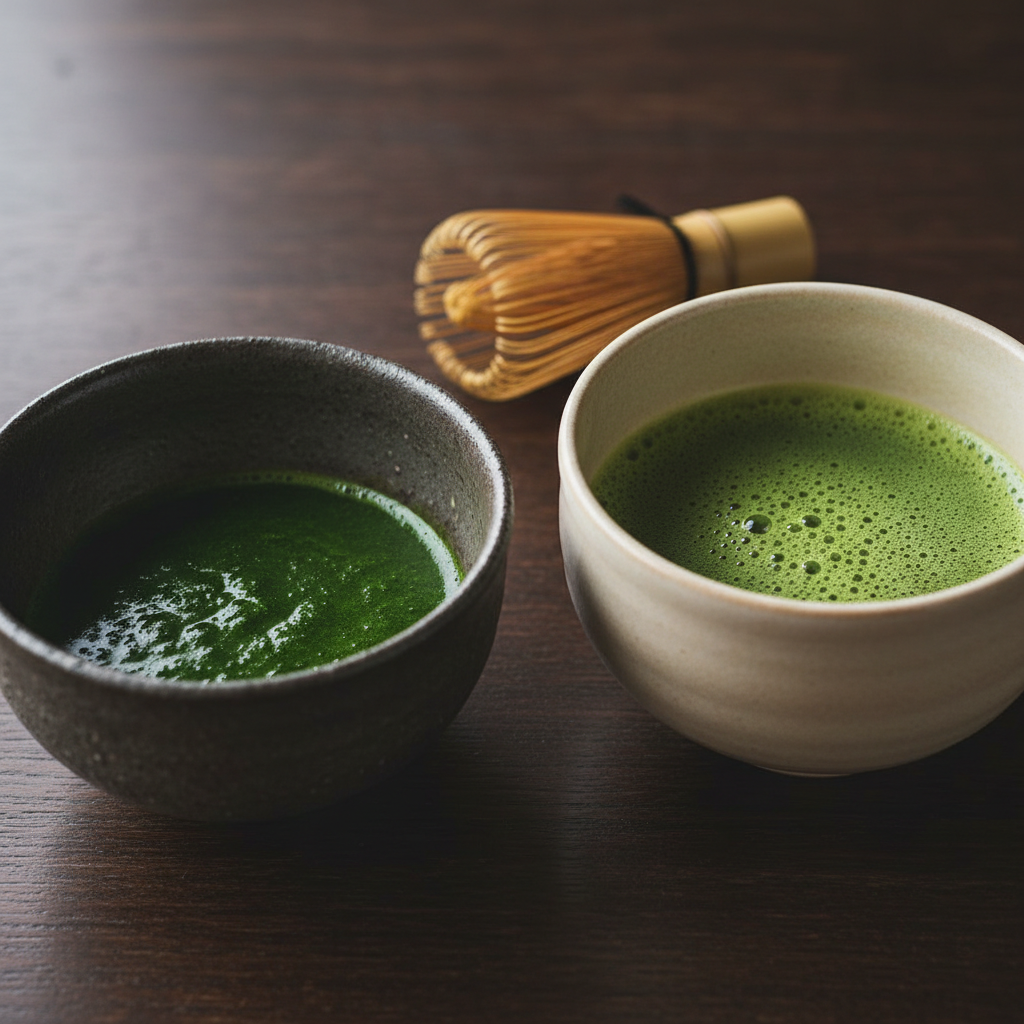
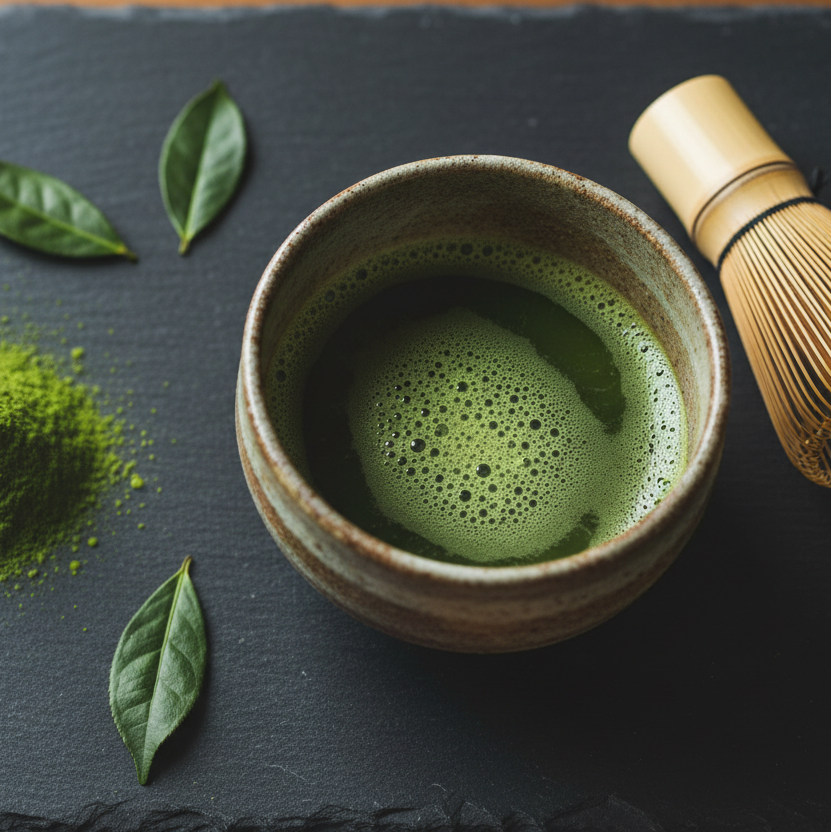
"Ceremonial grade," "premium grade," "culinary grade": these terms are everywhere in matcha marketing, but what do they really mean? Here's an honest guide to understanding what you're buying.
An inconvenient truth: there is no official classification
Let's start with an important clarification: there is no official system of matcha "grades" in Japan. The terms "ceremonial," "premium," and "culinary" are marketing inventions, primarily Anglo-Saxon, that appeared in the 2000s to help Western consumers find their way around.
In Japan, each tea house names and classifies its matchas according to its own nomenclature (often with poetic names like Isuzu, Wako, Yugen…). The real distinctions are based on:
- Intended use (koicha, usucha, culinary)
- Harvest (first spring harvest vs. later harvests)
- Parcel selection (young leaves vs. mature leaves)
- Fineness of grinding
That said, the Western nomenclature remains useful for guidance. Here's what it means in practice.
Culinary grade: matcha for cooking
What it is
Culinary grade matcha is designed to be mixed with other ingredients: milk (lattes), sugar (pastries), fats (ice creams, ganaches). It often comes from later harvests in the season, with more mature leaves, and slightly less fine grinding.
Why it exists
Using a high-quality ceremonial matcha in a cookie or latte is a waste: the aromatic nuances disappear under the sugar or milk. Culinary grade is optimized to maintain its green color when cooked and withstand temperatures and mixing without turning brown or losing its flavor.
Price range
Expect to pay between €8 and €15 for 20g of genuine Uji culinary matcha. Below that, it's powdered green tea, not matcha.
When to use it
Homemade lattes, ice creams, cheesecakes, tiramisu, cookies, ganaches, sauces. Any preparation where matcha is one ingredient among others.
Usucha grade ("premium" or "ceremonial"): matcha for drinking
What it is
Usucha, literally "thin tea," is the most common preparation of matcha in Japan: about 2g of powder for 70ml of water at 80°C, whisked with a chasen until a beautiful foam is formed.
Levels within usucha
This category actually covers a very wide spectrum of quality. At Marukyu-Koyamaen, for example, you'll find from low to high:
- Isuzu (五十鈴) — the ceremonial entry-level, honest and accessible
- Wako (和光) — a step up, rounder, smoother
- Yugen (又玄) — high-end usucha, with a pronounced umami flavor
Usucha is meant to be drunk on its own, like an espresso. Adding milk or sugar would be missing the point.
Price range
Between €15 and €40 for 20g of authentic Uji usucha, depending on the grade.
Koicha grade: the pinnacle of matcha
What it is
Koicha, literally "thick tea," is the supreme preparation of Japanese tea ceremonies. About 4g of powder is used for only 30ml of water, which is kneaded (not whisked) with the chasen until a fluid, shiny, foam-free paste is obtained.
Why it is the most demanding grade
Koicha only works with very high-quality matchas. The high concentration mercilessly reveals the slightest bitterness, the slightest astringency. A matcha that is good as usucha can be undrinkable as koicha. This is why only a handful of references from a tea house's entire range are classified as "koicha."
At Marukyu-Koyamaen, koicha includes notably:
- Kinrin (金輪) — premium koicha, creamy, deep umami
- Unkaku (雲鶴) — exceptional koicha, one of the highlights of the range
- Tenju (天授) — ultra premium koicha (the highest from the house)
Price range
Starting from €50 for 20g, and easily over €150 for 20g for the highest grades. Koicha is rarely consumed daily.
Summary table
| Grade | Main use | Concentration | Preparation | Price / 20g |
|---|---|---|---|---|
| Culinary | Cooking, lattes, pastries | Low (doesn't matter) | Mixed | €8-15 |
| Usucha (entry) | Daily drink | 2 g / 70 ml | Whisked with chasen | €15-25 |
| Usucha (premium) | Tasting | 2 g / 70 ml | Whisked with chasen | €25-40 |
| Koicha | Tea ceremony | 4 g / 30 ml | Kneaded with chasen | €50 and + |
How to choose without making a mistake
Three simple rules:
- Never mix usucha or koicha with milk or sugar. You'll lose everything you paid for.
- Do not drink culinary grade on its own. It's not meant for that; it will be bitter and unpleasant.
- Don't buy koicha if you're a beginner. Start with an entry-level usucha (Isuzu, for example), master the preparation, then progress.
Our approach at Japanity
Our Marukyu-Koyamaen collection covers the entire spectrum: culinary for your lattes and pastries, Isuzu and Wako for your daily usucha, Yugen for tasting moments, Kinrin and Unkaku to explore koicha. Each reference is classified by recommended use to help you avoid making the wrong choice.
Want to make the right choice from your first order? Explore the Marukyu-Koyamaen collection and let yourself be guided by grade.