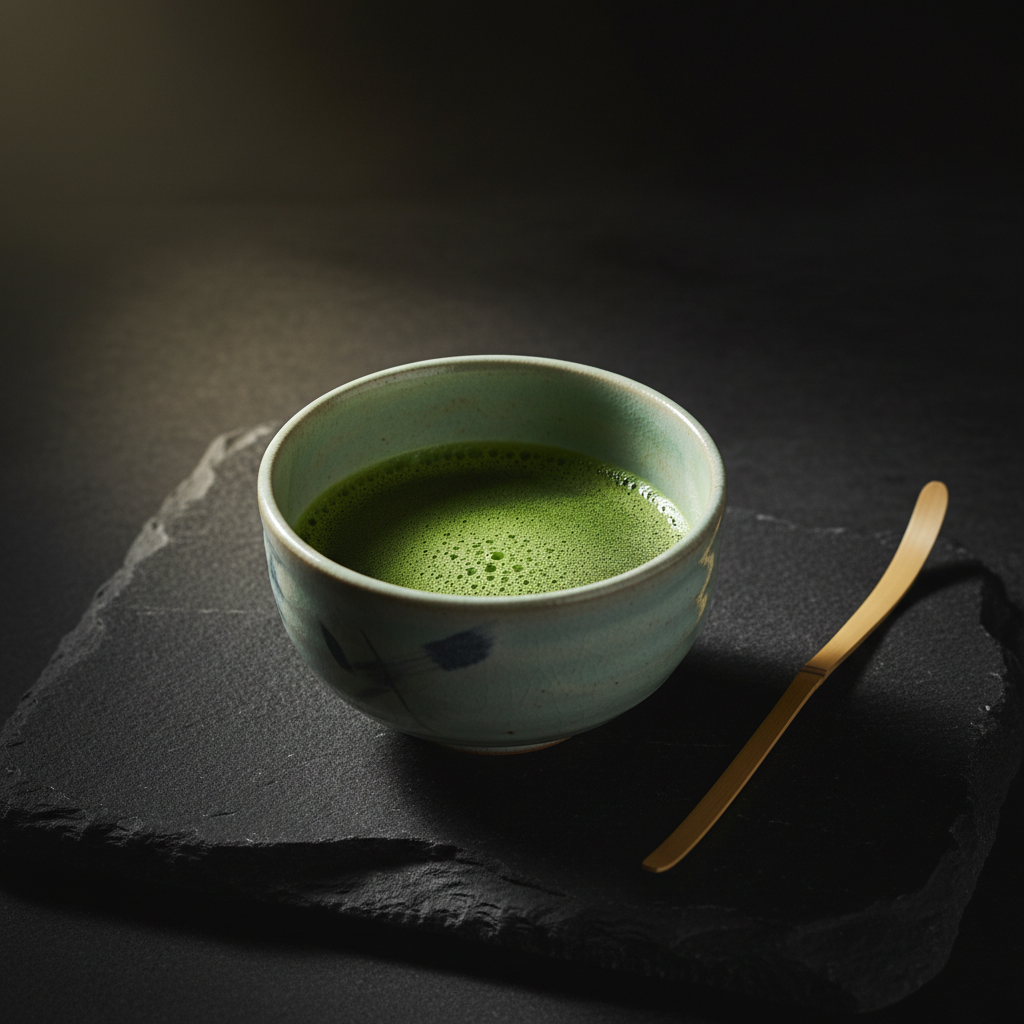
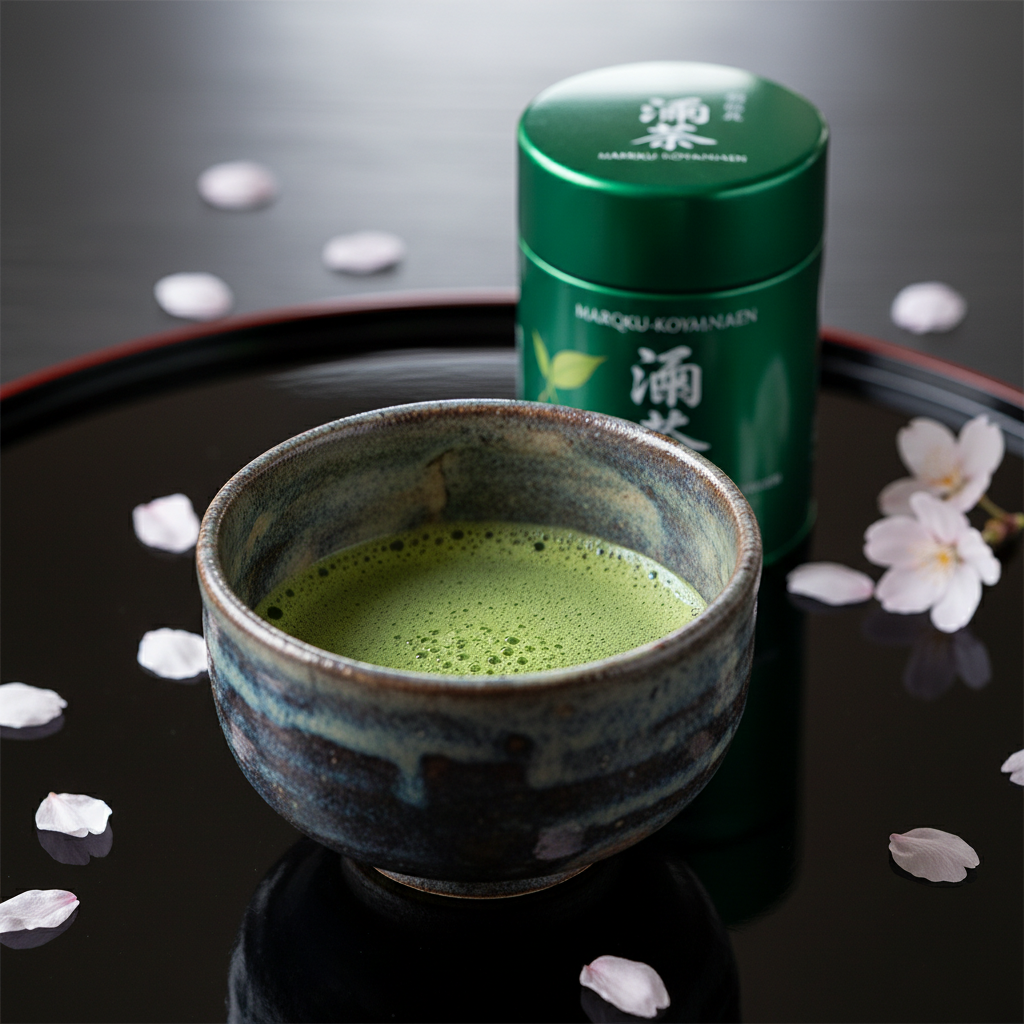
Once you've mastered Isuzu, Wako is the logical next step. Rounder, softer, more complex: this is the usucha matcha that accompanies regular enthusiasts in their tasting moments.
What is Wako?
Wako (和光) is a Marukyu-Koyamaen usucha matcha, positioned one notch above Isuzu in the ceremonial range. Its name means "harmonious light" or "light of peace" — a direct evocation of the Zen ideals associated with the tea ceremony.
It is a matcha intended for those who:
- Have already tasted an entry-level usucha and want to explore further
- Drink matcha several times a week and are looking for a richer profile
- Occasionally host and want to serve a high-quality usucha
Aromatic profile
Compared to Isuzu, Wako is denser and deeper:
- Color: intense jade green, slightly darker than Isuzu
- Nose: distinctly vegetal, notes of damp grass and fresh hay, creamy hint
- Attack: round, with no perceptible bitterness
- Mid-palate: more present umami, velvety texture, feeling of fullness
- Finish: long, soft, with subtle milky notes
Wako has the particularity of being very well balanced: it doesn't push any note to the extreme, but all the components of matcha (umami, vegetal, sweet, creamy) are expressed coherently.
How to prepare it
Wako remains an usucha: the preparation is identical to that of Isuzu.
- Sift 2g of Wako into a preheated chawan
- Pour 70ml of 80°C water onto the side of the bowl
- Whisk with a chasen in a rapid "M" motion for 15-20 seconds
- Smooth the surface with a slow circular motion
Advanced tip: with Wako, take the time to smell the bowl before drinking. The aromas are distinct enough to be perceived by the nose, which is not always the case with an entry-level usucha.
Wako or Isuzu: which to choose?
| Criterion | Isuzu | Wako |
|---|---|---|
| Price | € | €€ |
| Aromatic complexity | Simple, straightforward | More nuanced |
| Tolerance to errors | High | Medium |
| Ideal for | Beginners, daily use | Regular enthusiasts |
| Consumption | Every day | 2-3 times a week |
The simple rule: if you drink matcha several times a day, stick with Isuzu (for budget reasons). If you drink it a few times a week and want to maximize the pleasure of each bowl, switch to Wako.
Ideal occasions
Weekend breakfast
Taking the time to prepare a Wako on a Saturday morning, without pressure, is a very relaxing ritual. The quality of the matcha invites you to slow down.
After a refined meal
Wako beautifully replaces an after-meal coffee, especially after Japanese cuisine. The umami of the matcha extends that of the meal.
Receiving a passionate friend
If your guest knows matcha, serving a Wako rather than an Isuzu shows that you take the moment seriously.
What not to do
Three mistakes to avoid with Wako:
- Preparing it as a latte with sweetened milk: you lose all the subtlety you paid for. Keep Wako for pure usucha preparation.
- Using it in pastries: same problem, except for very high-end pastries with no other competing flavors.
- Preparing it as koicha: Wako is not suitable for this. For koicha, switch to Kinrin or Unkaku.
Storage
Like all matcha, Wako should be stored in an airtight container in the refrigerator, for a maximum of 2 months after opening. Consume it quickly to enjoy its richest aromatic profile: after 6 weeks, the finest notes begin to fade.
Our verdict
Wako is the matcha for regular pleasure. Neither entry-level nor top-tier, it occupies the sweet spot of usucha: a rich and coherent aromatic profile, at a price that remains accessible for weekly consumption. It's probably the best choice if you want a single versatile matcha for your routine.
Want to take it to the next level? Discover Wako and our Marukyu-Koyamaen selection on our shop.