Hesitating between matcha and hōjicha? These two essential Japanese teas have everything to charm, but they appeal to very different times – and palates. Here is a complete comparison to help you choose the one that suits you best.
Matcha and hōjicha: two green teas, two philosophies
Matcha and hōjicha both come from Camellia sinensis, the tea plant. However, their production, taste, and effects have almost nothing in common. Matcha is a shaded green tea powder, ground with a stone mill, consumed suspended in water. Hōjicha, on the other hand, is a roasted leaf tea, processed at high temperature, which releases toasted and caramelized notes.
Choosing between the two is like choosing between the intensity of a green espresso and the sweetness of an evening tea.
Matcha: the Japanese energy concentrate
Origin and production
Matcha mainly comes from the regions of Uji (Kyoto), Nishio, and Kagoshima. The tea plants are shaded for three to four weeks before harvest, which boosts the production of chlorophyll and L-theanine. The leaves, called tencha, are then dried, stripped of their veins, and then ground very slowly with a stone mill – about 30 grams per hour.
Taste and color
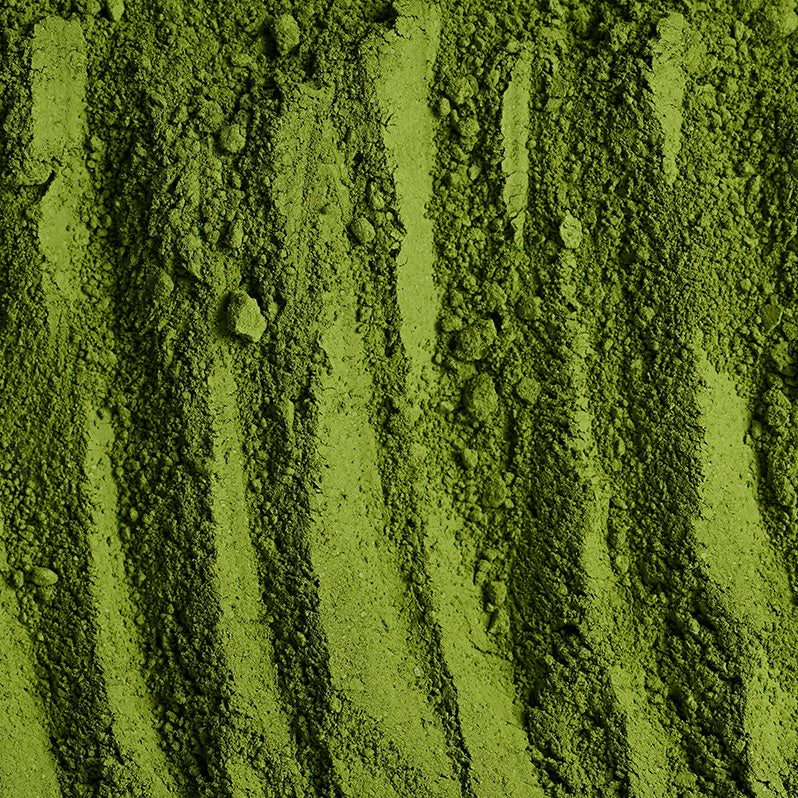
Good matcha has a deep, almost fluorescent green color. On the nose, there are vegetal, marine, and sweet notes. In the mouth, it is intense, slightly bitter, with a long umami finish (umami is that "fifth Japanese flavor," rich and savory).
Effects
Matcha contains both caffeine and L-theanine, an amino acid that modulates the effects of caffeine. The result: long-lasting energy, without the harsh jolt of coffee. It's the tea for concentration, work, and sports.
Hōjicha: the roasted sweetness
Origin and production
Hōjicha was born in Kyoto in the 1920s when a tea merchant had the idea of roasting his unsold leaves rather than throwing them away. The method has remained: bancha (second harvest green tea) or sencha leaves are roasted at around 200°C for a few minutes. The leaves change from green to reddish-brown.
Taste and color
The infusion is a golden brown, never green. The taste recalls roasted hazelnuts, caramel, and toasted bread. No bitterness, no astringency. It's a "cocooning" tea, soft, round, slightly sweet.
Effects
Roasting destroys a large part of the caffeine. Hōjicha is therefore almost caffeine-free, making it the ideal tea for the evening, for children, or for people sensitive to caffeine. It is also very digestible after meals.
Comparison table: matcha vs hōjicha
| Criterion | Matcha | Hōjicha |
|---|---|---|
| Form | Fine powder | Roasted leaves |
| Color | Bright green | Golden brown |
| Taste | Vegetal, umami, intense | Roasted, sweet, caramel |
| Caffeine | High | Very low |
| Ideal time | Morning, sport, work | Evening, after meals, relaxation |
| Preparation | Bamboo whisk (chasen) | Classic teapot |
| Price per gram | High | Affordable |
Which tea to choose according to your profile?
You want energy and concentration
Choose matcha. A bowl in the morning is a great substitute for coffee, without the anxiety spike that follows. Ideal for students, remote workers, and athletes.
You are looking for an evening tea
Hōjicha is unbeatable. Its low caffeine content and comforting notes make it the perfect companion for the end of the day or a dessert.
You are new to Japanese tea
Start with hōjicha. Its accessible taste is immediately appealing, unlike matcha, which requires a palate accustomed to umami.
You like to cook
Both are excellent in pastry. Matcha gives its iconic green color to cookies, ice creams, and lattes. Hōjicha brings a refined roasted note to crème brûlées, panna cottas, and chocolates.
Can you consume both?
Absolutely, and it is even recommended. Many enthusiasts alternate: matcha in the morning, hōjicha in the evening. The two teas are complementary and cover the entire day. It's also an excellent way to discover the richness of Japanese tea, which is not limited to sencha and matcha.
Our verdict
There is no "better" tea between matcha and hōjicha – there is the one that suits your moment. Matcha is a shot of vitality, hōjicha is a moment of sweetness. At Japanity, we source both from trusted Japanese houses, including Itoen, one of the most respected in the country.
Ready to choose yours? Discover our selection of authentic matcha and hōjicha, delivered directly from Japan.