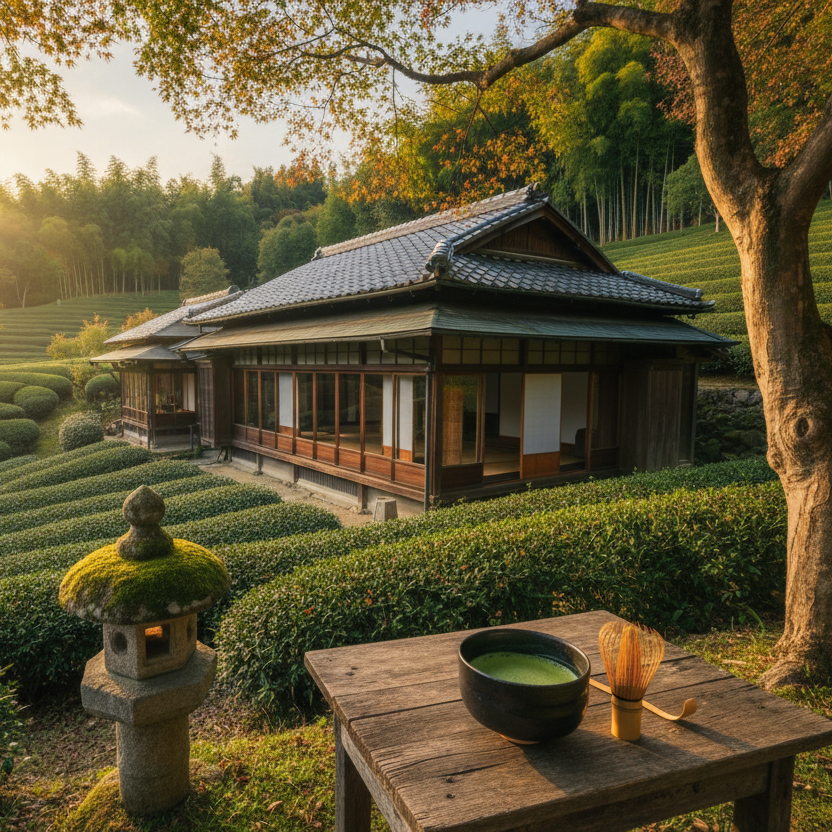
If you're interested in authentic matcha, one name always comes up: Marukyu-Koyamaen. This Uji-based company, founded in 1704, is today considered one of the top three global benchmarks for ceremonial matcha. Here's a complete guide to understanding its range and choosing the matcha that's right for you.
A Three-Century-Old Matcha House
Marukyu-Koyamaen was founded in 1704 in Ogura, in the Uji region, which has been considered the cradle of Japanese matcha since the 14th century. The Koyama family has continuously cultivated tea there for over ten generations, passing down artisanal expertise that combines traditional farming and stone mill grinding.
The company regularly supplies the matcha used in major Japanese tea ceremonies (chanoyu), particularly for the Urasenke and Omotesenke schools, the two largest schools of the Way of Tea. Its matchas are also used by many Michelin-starred pastry chefs in Japan and abroad.
Why Uji is the Home of Matcha
Uji, south of Kyoto, boasts rare conditions for tea: morning mists, rich volcanic soils, and significant temperature differences between day and night. These conditions slow the growth of tea plants and concentrate L-theanine and chlorophyll in the leaves—the two compounds responsible for the deep green color and the characteristic umami taste of great matcha.
Unlike poor-quality matcha (often produced in China or outside designated Japanese areas), Uji matcha has a luminous jade color, an ultra-fine texture to the touch, and a distinct vegetal aroma as soon as the tin is opened.
Understanding the Marukyu-Koyamaen Range
The company offers over thirty different products, divided into three main families according to their use.
Usucha Grades (Thin Tea)
Usucha is the most common matcha preparation: approximately 2g of powder for 70ml of water at 80°C, whisked with a chasen until a beautiful foam is obtained. At Marukyu-Koyamaen, the usucha range includes:
- Isuzu (五十鈴) — the entry-level ceremonial grade, the company's bestseller, ideal for discovering true matcha
- Wako (和光) — a classic, balanced usucha, perfect for daily use
- Yugen (又玄) — a high-end usucha, softer and more umami, for connoisseurs
Koicha Grades (Thick Tea)
Koicha is a much more concentrated preparation: approximately 4g of powder for only 30ml of water, kneaded (not whisked) until a fluid, shiny, and foam-free paste is obtained. It is the reigning preparation for tea ceremonies, demanding and reserved for very high-grade matchas.
- Kinrin (金輪) — a premium koicha with a creamy texture and deep umami
- Unkaku (雲鶴) — an exceptional koicha, one of the range's pinnacles, with a long and complex finish
Culinary Matchas
For baking, lattes, or cooking, Marukyu-Koyamaen offers matchas in economical formats (often in 100g bags or more). These matchas retain the Uji origin and grinding quality of the company but are selected to withstand heat, sugar, or milk without losing their color or taste.
Which Matcha to Choose Based on Your Profile
You're new to authentic matcha
Start with Isuzu. This is the matcha that most Japanese people use daily at home. Its affordable price and balanced taste (light umami, low bitterness) make it the ideal entry point.
You prepare matcha every day
Switch to an economical sachet format (large-size Isuzu or culinary matcha). You maintain Uji quality without breaking your budget.
You want to progress towards the tea ceremony
Move from Wako to Yugen, then explore koicha with Kinrin. These grades will make you understand why matcha can reach aromatic heights comparable to grand cru wines.
You cook or make lattes
Opt for culinary matcha in a sachet. It gives a beautiful green color to cookies, ice creams, and lattes, without you wasting ceremonial matcha in a preparation where its subtlety would be lost.
Recognizing Authentic Marukyu-Koyamaen Matcha
Three signs of authenticity to check:
- The circular "kyu" (久) logo on all tins and sachets — the company's registered trademark.
- The mention 宇治小山園 (Uji Koyamaen) in Japanese characters.
- A grinding date (製造年月日) printed on the packaging: premium matchas are ground to order and lose their aromas within a few weeks once exposed to air.
Beware of resellers offering "Uji matcha" at bargain prices without traceability — authentic Marukyu-Koyamaen matcha cannot structurally fall below a certain price, as stone mill yields remain limited to approximately 30 grams per hour.
Our Marukyu-Koyamaen Selection at Japanity
At Japanity, we have selected the company's key references to cover all uses: from everyday Isuzu to exceptional Unkaku koicha. Each reference is imported directly from Japan, with a recent grinding date to guarantee the freshness of the aromas.
Ready to discover matcha as the Japanese have been drinking it for 400 years? Explore our Marukyu-Koyamaen collection and let grade guide you.